Client
With agricultural experience since 1830, Ametller Origen has now 111 stores throughout all Catalonia integrating the agricultural production, the elaboration and the commercialization to improve people's nutrition and health.
Problem
Ametller Origen presents a model of a reusable mesh bag for bulk produced in Asia, which now wants to produce locally with specific fabrics, components and Pantone. The product is divided into four elements: the net, the drawstring, the label and the packaging.
Arpe's Solution
for Ametller
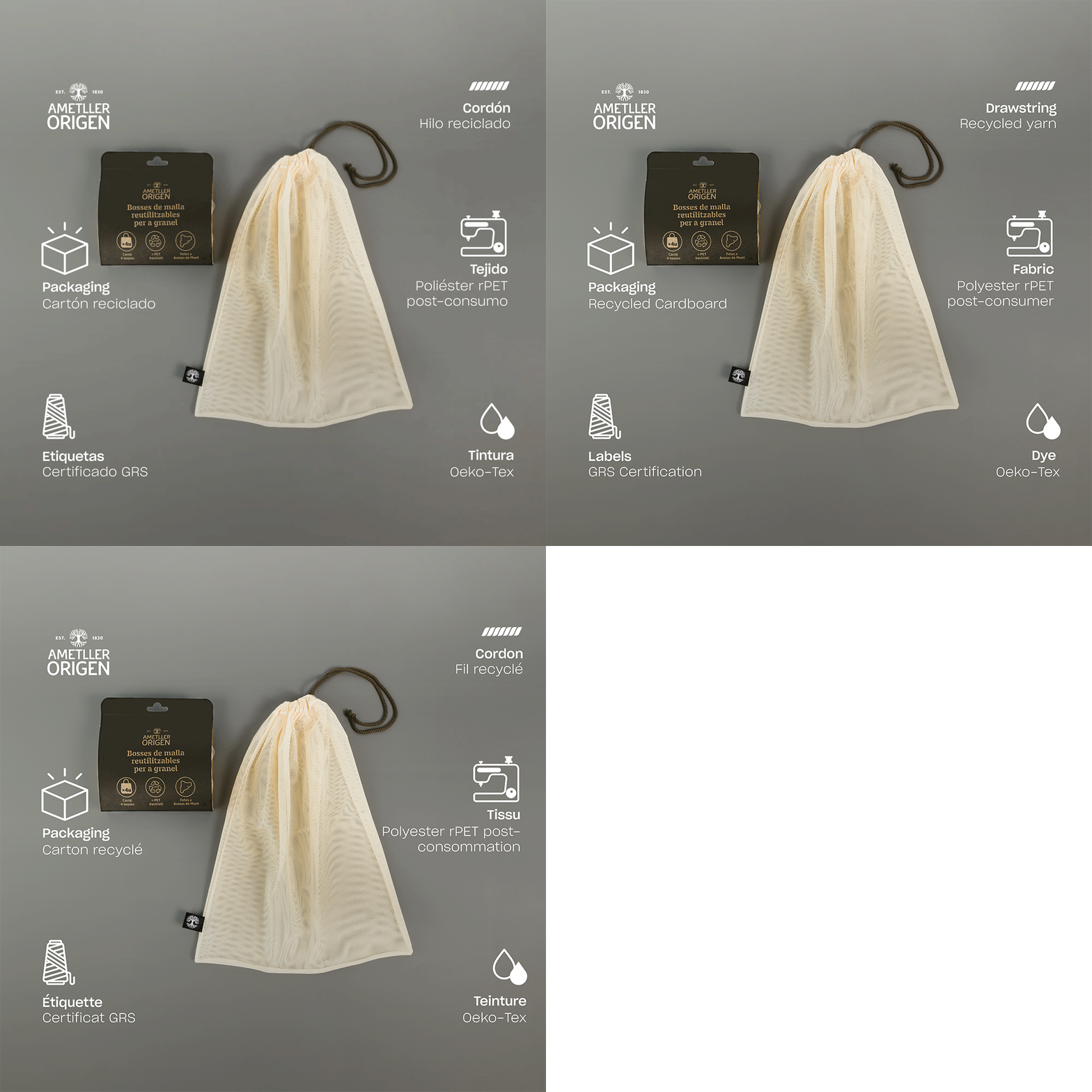
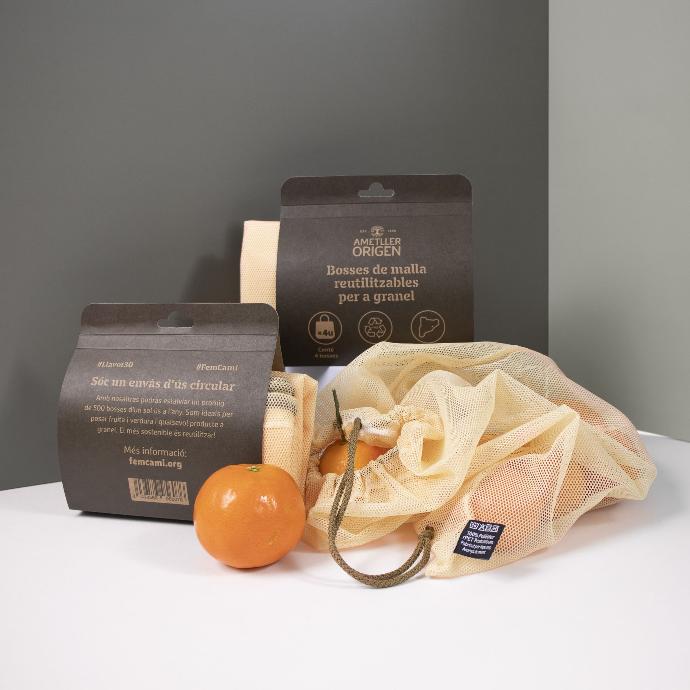
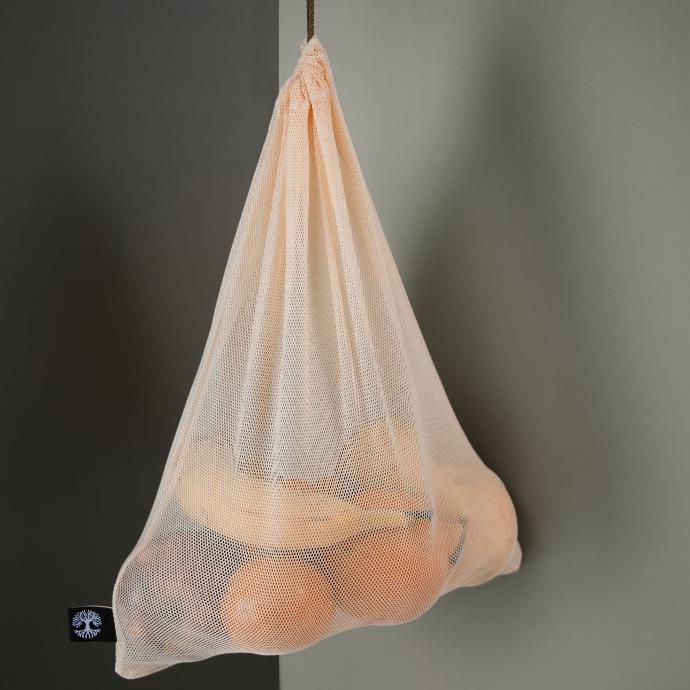
From Arpe, we offer a monomaterial and locally produced mesh bag, recycled and recyclable. All the elements are manufactured in local companies (km0) and they are made of the same post-consumer rPET material, so they can be recycled all together at the end of their use.
Processes
Mesh
We define the fabric and the weave of the mesh looking for the best locally produced alternative. Thus, we present Ametller Origen with three different samples, all made of fabric fabricated with polyester yarn from post-consumer rPET bottles. Once chosen, we take the meshes to dye in PANTONE 155C.
Drawstring
We contact a local supplier who also aligns with our values and works with post-consumer rPET materials. Thus, we present Ametller Origen with a couple of samples of custom-made drawstrings. In this case, the yarn is first dyed in the PANTONE 752C and the cord is braided afterwards.
Label
Labels are a very important element, since they complement the product and provide an extra quality and value to the brand. Thus, from Arpe we propose a different label, weaved in high definition and illustrating the brand, the materials, the fabrics and the origin.
Packaging
For the new packaging, we go to the second-generation family-owned printing company at km0, with who work since our beginnings. We also replace the small plastic thread that closed the cardboard with a gluing process that does not generate extra waste and aligns with the sustainability values of the mesh bag.
Final Product
We are sustainable
because...
We look for the most optimal sizes for the bags and cut the fabric accordingly, so that we generate the least amount of waste.
All the elements found in the bag come from local businesses, at km0.
We manufacture with fabric made of polyester yarn from post-consumer rPET bottles and we print with OEKO-TEX certified inks.
The bags are mono-material, so all the elements can be recycled together when they can no longer be used.
We design and manufacture in our factory in Arenys de Munt, which runs on 100% renewable energy.
We design and manufacture in our factory in Arenys de Munt, which runs on 100% renewable energy.